Garage Floor Flakes: How to Pick a Blend That Lasts in Cleveland
Walk into ten coated garages around Cleveland and you can spot the cheap ones from the doorway. The garage floor flakes are clumped in one spot and missing in another, the edges have lifted around the drain, and a white crust of road salt has settled into every low spot. The flakes were never the real problem. What sat underneath them was, and that is why choosing a blend starts with the polyaspartic floor coating system it lives in, not the color card.
Color is the last decision we make on your floor, not the first. Get the system right and almost any blend will look sharp for as long as you own the home. Get it wrong and no blend can save it.
The Technical Edge: Why Garage Floor Flakes Are Part of the Structure
On a properly engineered floor, the chip layer carries weight. Our Forever Floor starts with industrial diamond grinding to open the concrete. Every pit and crack is filled with a fast-curing polyurea, then the slab is ground a second time so the surface is flat, clean, and profiled. Only then does the five-layer system go down: a tinted polyaspartic primer that penetrates the concrete, a clear coat, the decorative chips, clear slip-resistant beads, and a clear topcoat that locks everything in place.
The order is deliberate. Many installers throw chips straight into the base coat, which means the flakes interrupt the very layer responsible for gripping the concrete. We keep a separate clear coat between the primer and the chips so the bond line stays continuous. The chip layer then adds impact resistance on top of that bond, so a dropped socket set or a sliding jack stand hits a reinforced surface instead of a thin film.
Compare that with a big-box kit. A homeowner acid-washes the slab, rolls on a single coat of retail epoxy, and tosses a bag of vinyl chips into it by hand. The chips sit proud of a surface that was never properly bonded, they trap grime along their edges, and the whole thing starts to let go after a winter or two. Same word on the box. Completely different floor.
The Lifestyle Benefit: Choosing a Blend You Will Still Love in Year Ten
We offer nine standard blends: Blue Steel, NightFall, Slate, Obsidian, Pumice, Basalt, Saddletan, Sandstone, and Fall, along with custom options. A few honest rules of thumb from years of walking finished garages:
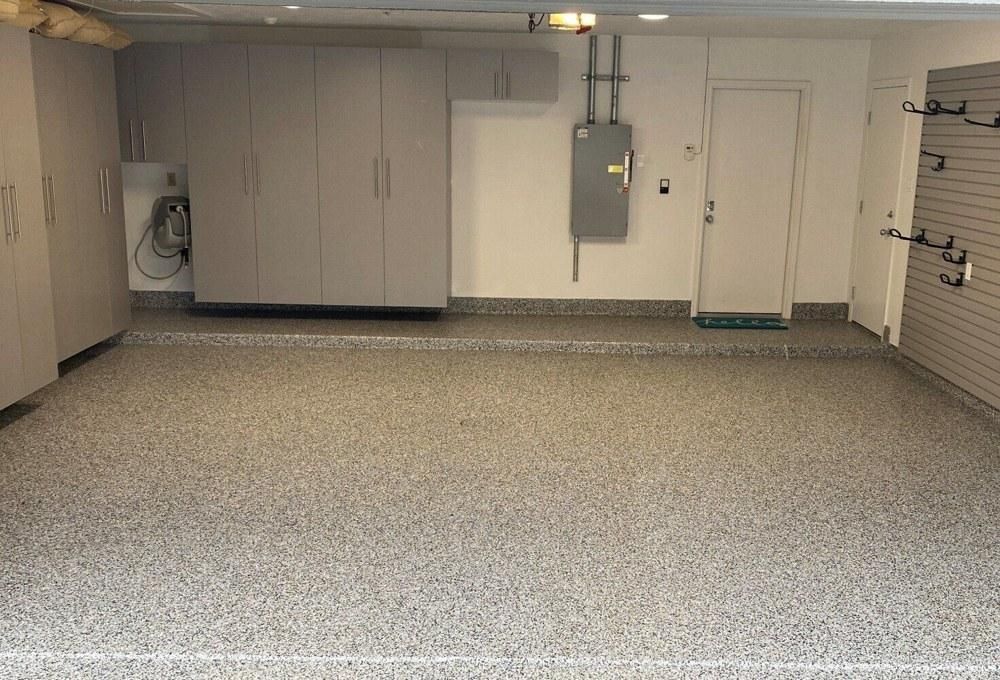
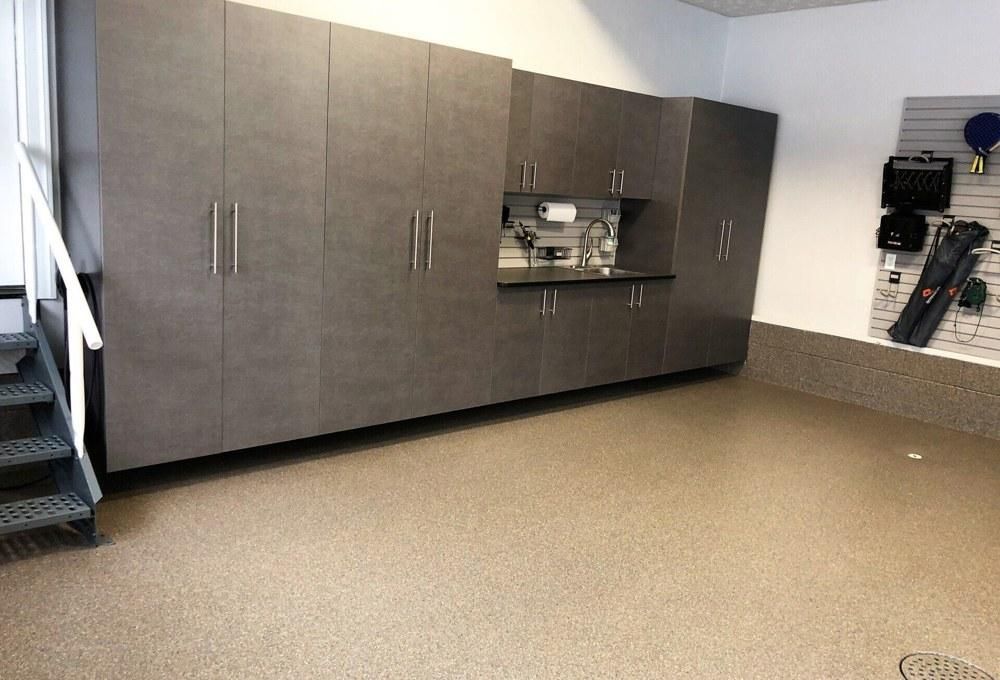
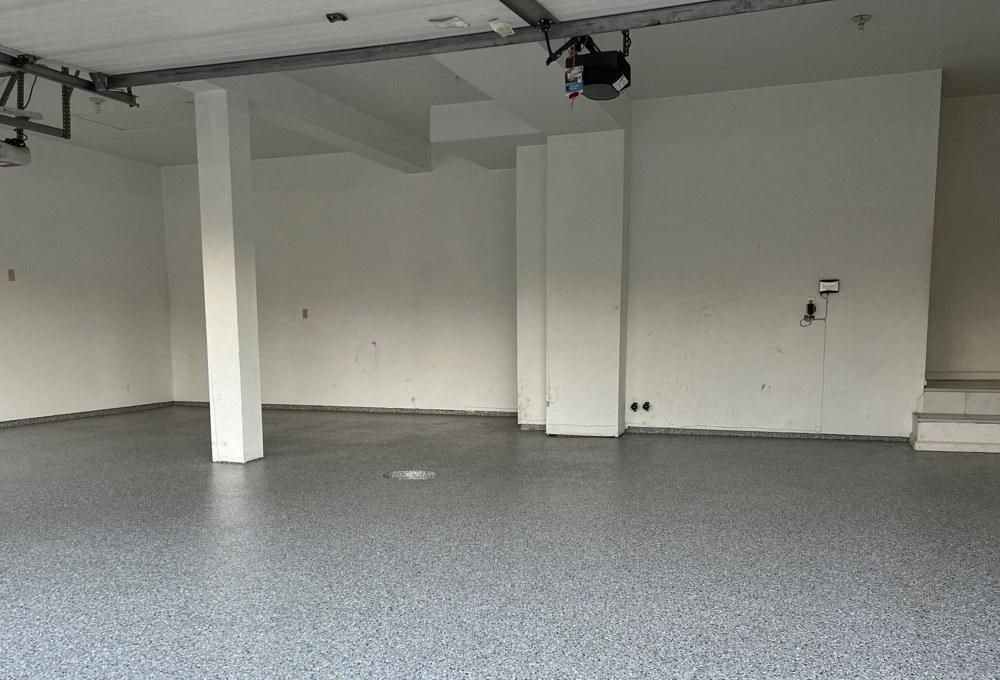
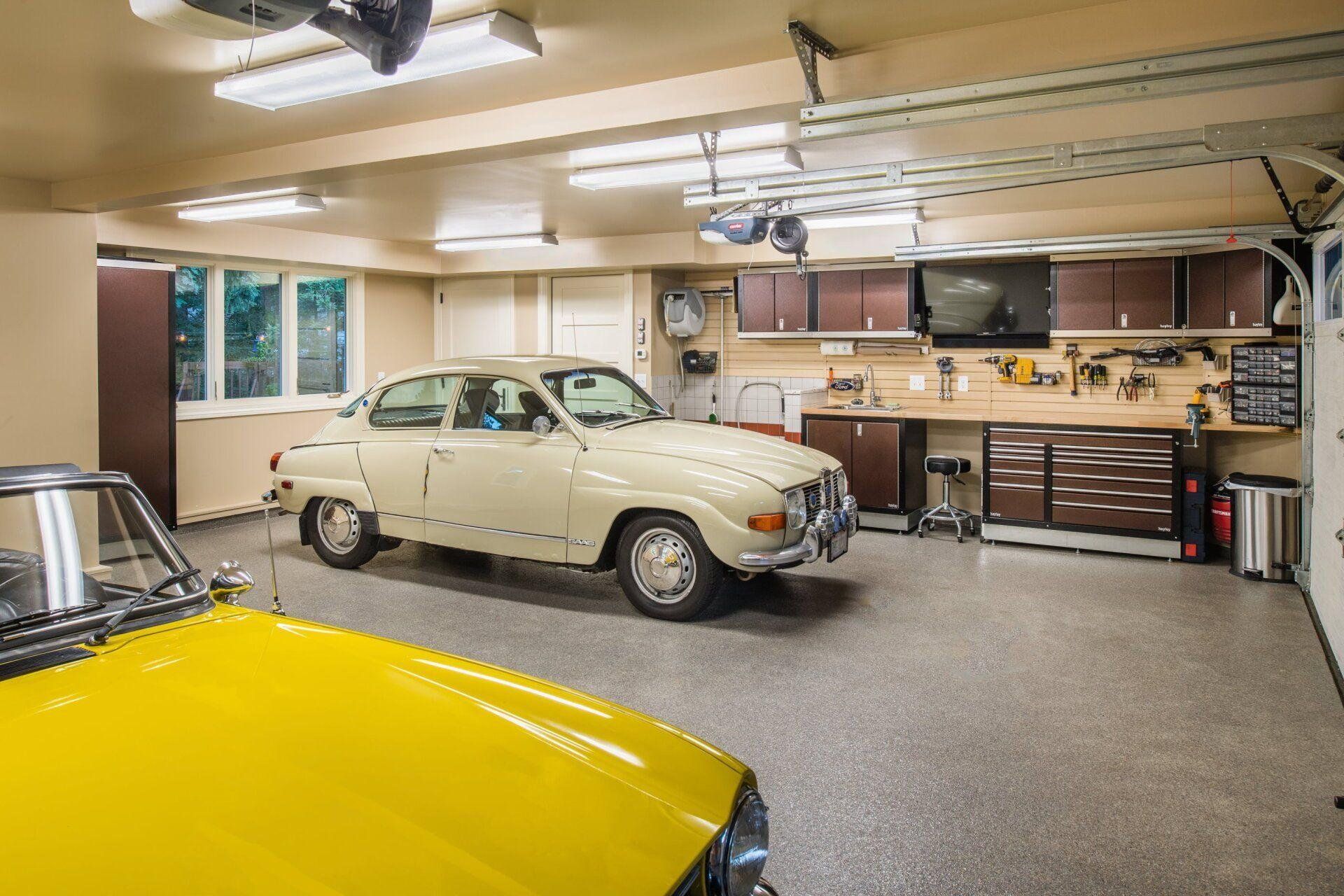
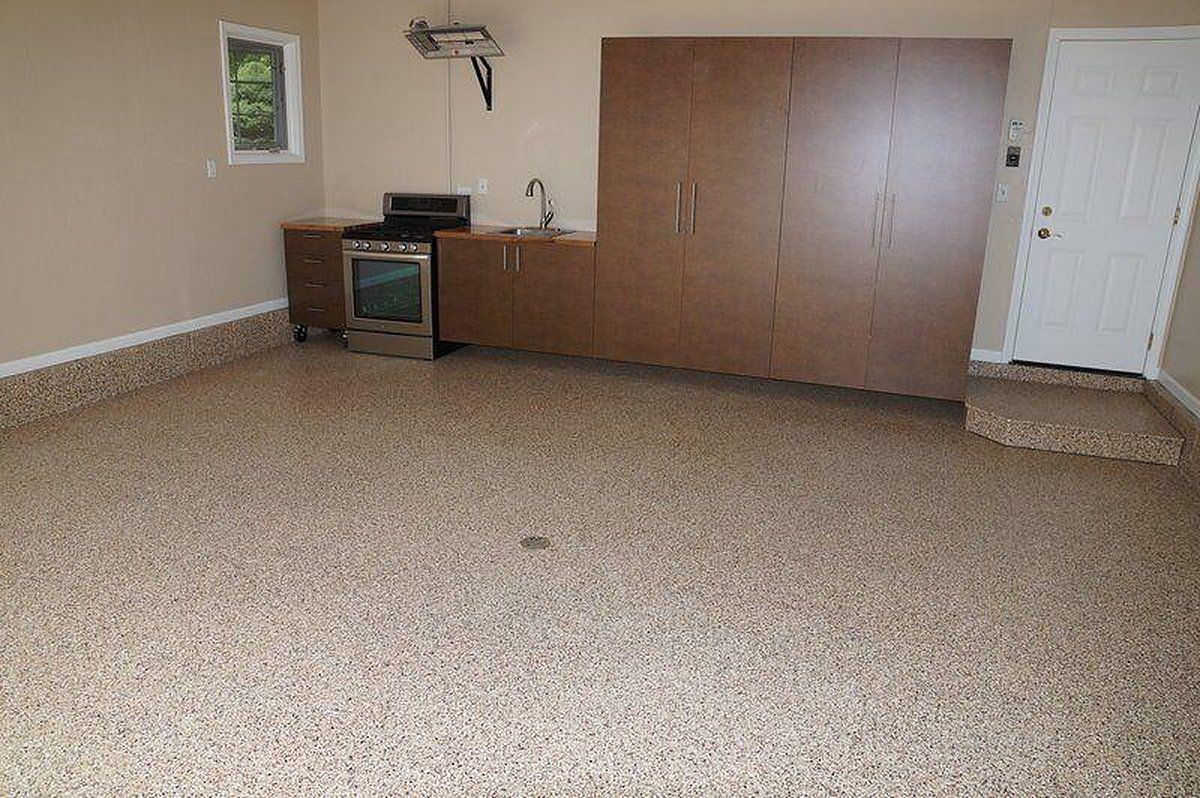
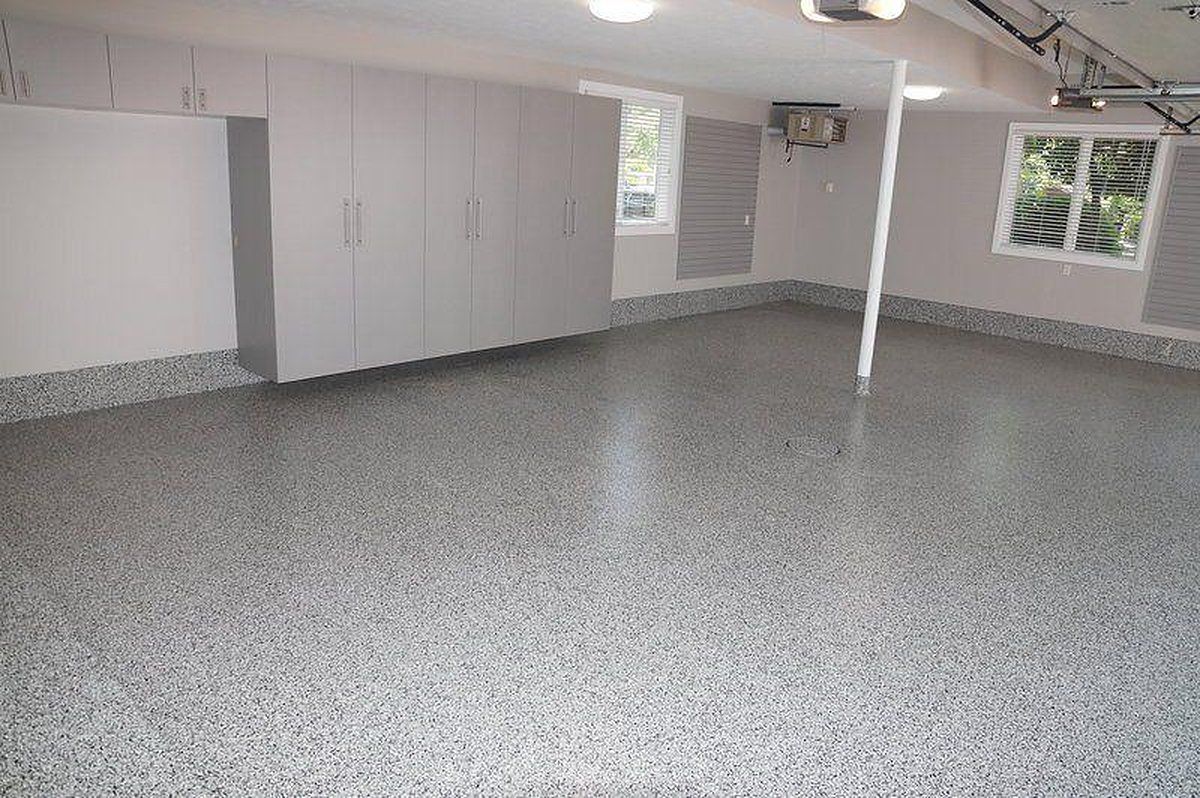
Warm, sandy blends like Sandstone and Saddletan are the most forgiving. They hide tire dust, dried salt, and the odd leaf between cleanings, which is why they are popular with families who use the garage hard every day. Gray blends like Slate, Basalt, and Pumice read clean and modern and sit comfortably next to almost any cabinet finish. Darker blends like Obsidian and NightFall are striking under a collector car, but they will show lint and salt residue sooner, so pick them because you love them, not because they looked good in a photo.
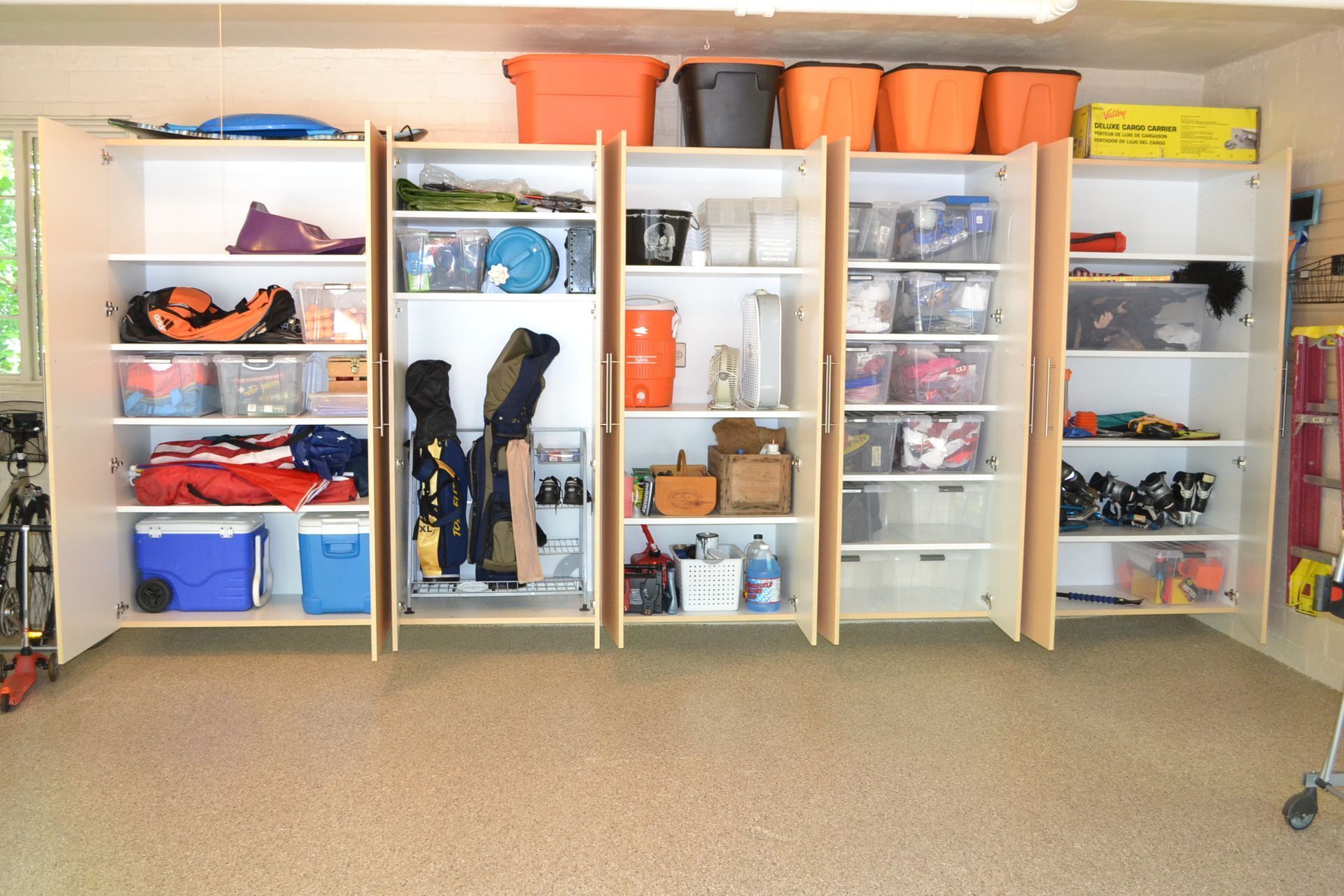
Design the room, not just the floor. Our cabinets come in nine finishes and our slatwall in eleven colors, so the floor, walls, and storage can be planned as one space. When the pieces agree with each other, the garage stops looking like a garage and starts looking like part of the house, and buyers notice that when it is time to sell.
Last tip: always judge samples in your own garage light. A blend that looks warm under showroom bulbs can look completely different under cool LED shop lights or a north-facing window.
Ohio-Specific Considerations
Road salt and white crust. Salt brine rides in on your tires from November through March and dries into a pale film. A mid-tone blend camouflages it between rinses, and the sealed topcoat keeps the brine from ever reaching the concrete.
Snowmelt and slip resistance. A coated floor covered in meltwater should not feel like a skating rink. The clear slip-resistant beads in our system give the surface grip, so walking from the car to the house stays safe when the floor is wet.
Freeze-thaw cycling. Northeast Ohio slabs expand and contract dozens of times each winter. Filling every crack with polyurea and bonding into ground concrete lets the coating move with the slab instead of popping off it. You can see how finished floors hold up across the region in our project gallery.
Winter installation. Our polyaspartic cures in almost any temperature. A January install in Hudson or Westlake is a normal day for our crew, not a gamble.
Frequently Asked Questions
Can I create a custom flake blend?
Yes. Beyond our nine standard blends, custom color options are available. We bring physical samples to your free evaluation so you can see them in the space where they will actually live.
Do flakes make the floor harder to clean?
No. The chips are fully encapsulated under the clear topcoat, so dirt has nothing to cling to. A damp mop or a quick hose-down handles salt and everyday grime.
How soon can I park on the new floor?
The full system installs in one day and is dry within a few hours. In most cases a floor installed today is ready to use tomorrow, and your belongings go back in the day after installation.
The Showroom Finish: Garage Floor Flakes Built to Stay Put
Picking garage floor flakes should be the fun part of the project, and it is when the prep, the chemistry, and the warranty are already handled. Our Forever Floor carries a transferable lifetime warranty with no exclusions, which says more about what is under the color than any brochure could.
Ground right. Bonded right. Finished in a blend you will love. Request your free on-site evaluation and quote and we will walk your slab, bring samples into your garage, and give you a straight answer on what will last.