Why Garage Floor Prep Decides Whether Your Coating Lasts in Cleveland
Peel back a failed garage floor coating in Cleveland and you almost never find a bad product underneath. You find bad garage floor prep. The coating didn’t fail because the resin was cheap — it failed because it was poured onto a slab that was never opened up, never cleaned down to sound concrete, and never given a surface the coating could actually grip. That is the uncomfortable truth most contractors won’t tell you, and it is the single biggest reason two floors that look identical on day one end up worlds apart by year three. Our Forever Floor system starts exactly where the low bidders cut corners: the grind.
A coating is only as good as its bond — and the bond is only as good as the concrete beneath it.
The Technical Edge: Diamond Grinding vs. the Shortcuts
Fresh concrete leaves behind a weak, powdery top layer called laitance. It looks like solid floor, but it is a crumbly film sitting on top of the real slab. Bond a coating to laitance and you have bonded it to dust — it will release in sheets the first time a tire heats it or water works underneath. This is why the prep method is not a detail. It is the whole ballgame.
The cheap route is acid etching: splash muriatic acid on the slab, rinse, and hope it roughens the surface enough. It doesn’t. Acid etching is inconsistent from one square foot to the next, it cannot remove oil, sealers, or old coatings, it leaves chemical residue that sabotages adhesion, and it never opens the concrete’s pore structure to a proper, measurable profile. It is fast and it is cheap, and that is the entire appeal.
Diamond grinding is the professional standard because it mechanically removes the laitance and exposes clean, sound concrete with an open, uniform texture the coating can key into. At Garage Finisher we run a two-step process: we grind the slab to profile, fill every visible pit, crack, and control joint with a fast-curing polyurea, then grind a second time and vacuum the surface clean. Only then do we prime. Our proprietary polyaspartic primer soaks down into those open pores and forms a mechanical and chemical lock with the slab, not a film balancing on top of it. That is the difference between a floor that peels and a floor that becomes part of the concrete.
The Lifestyle Benefit: A Floor You Stop Thinking About
When the prep is right, the floor drops off your worry list entirely. No chipping at the apron where the tires bite, no hot-tire pickup lifting patches every summer, no chalky re-coat conversation every few years. You drop a wrench, drag a jack stand, run a snowblower across it in February — and it shrugs it off. That is what you are actually buying with proper preparation: permanence you never have to think about.
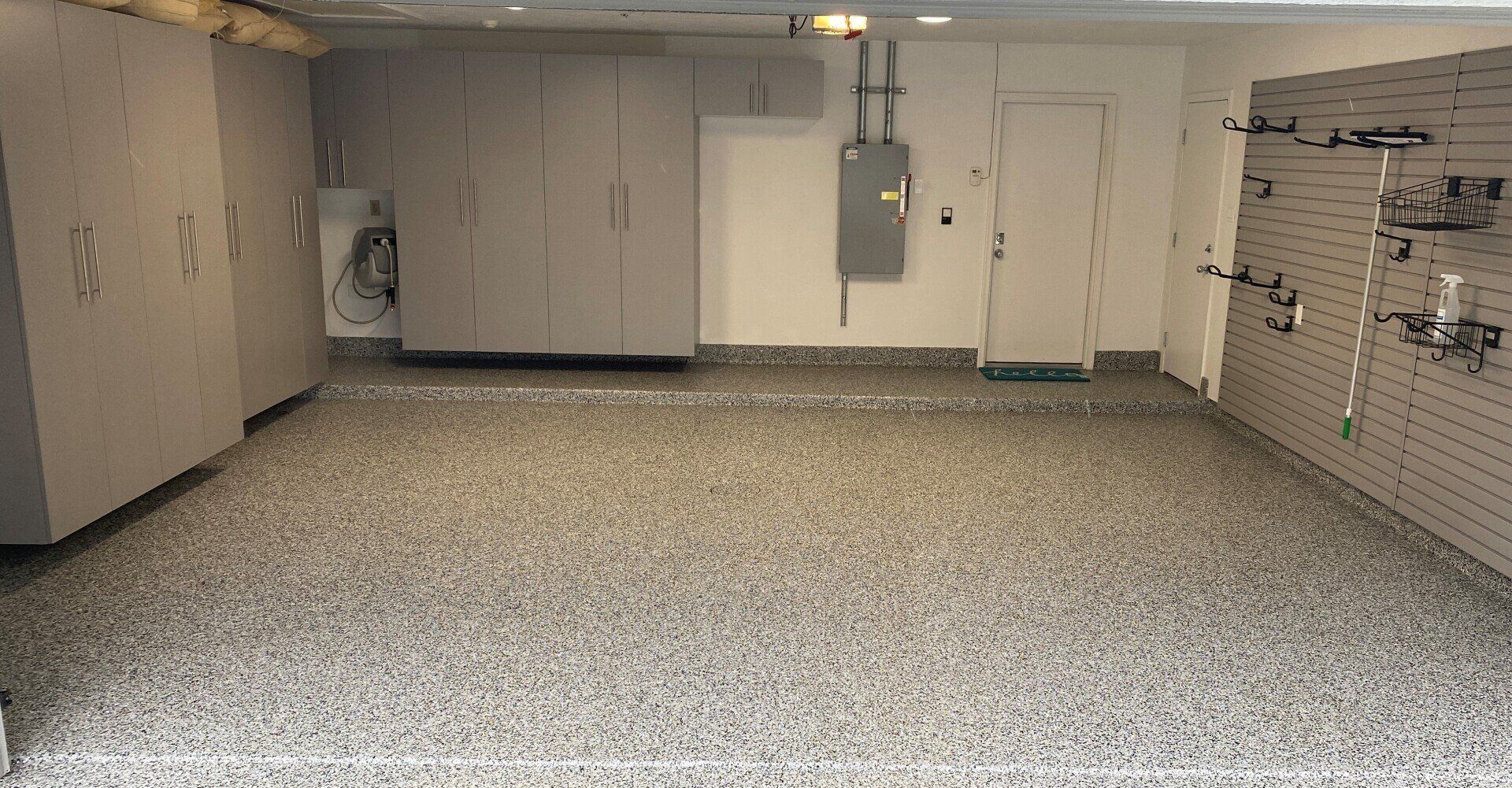
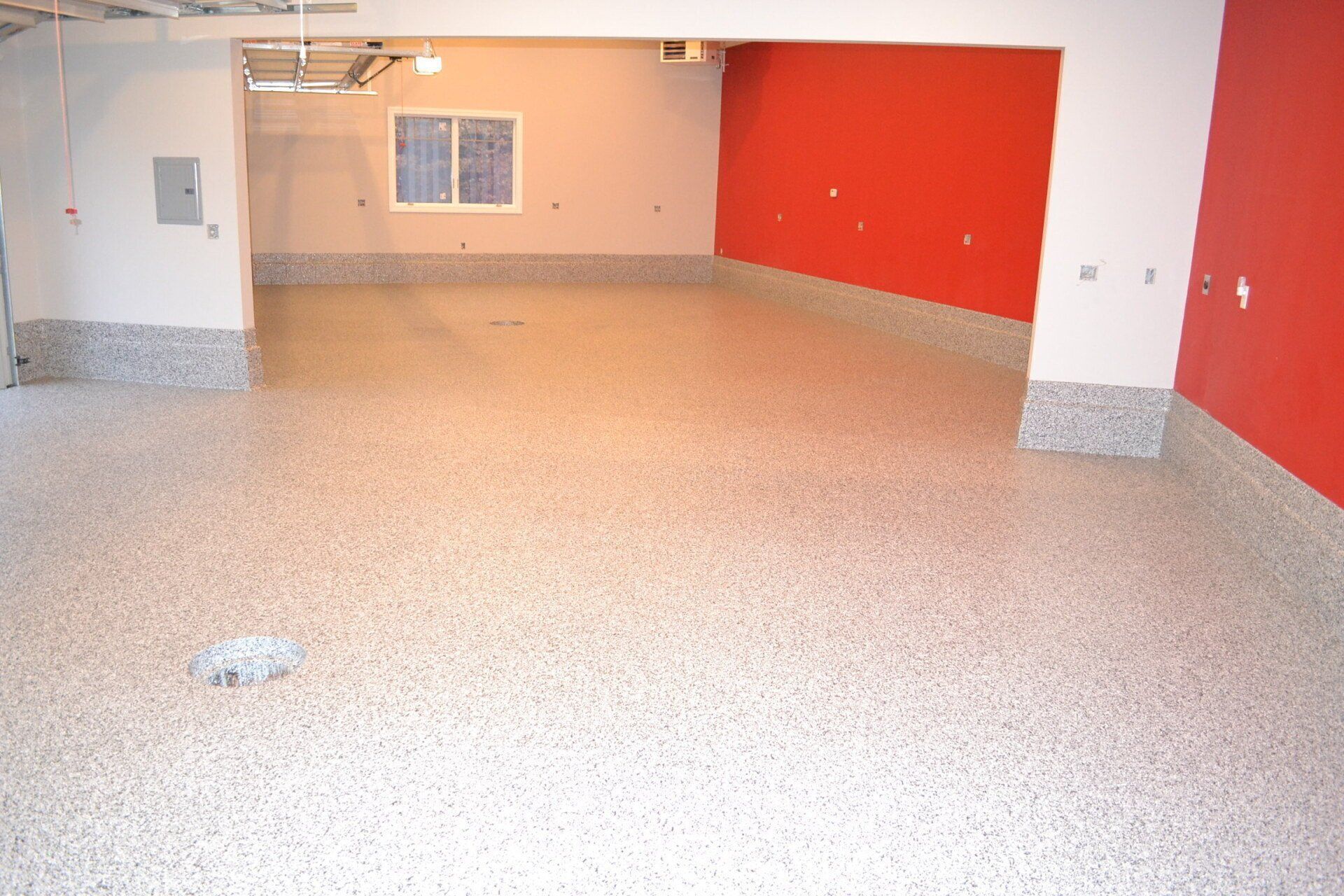
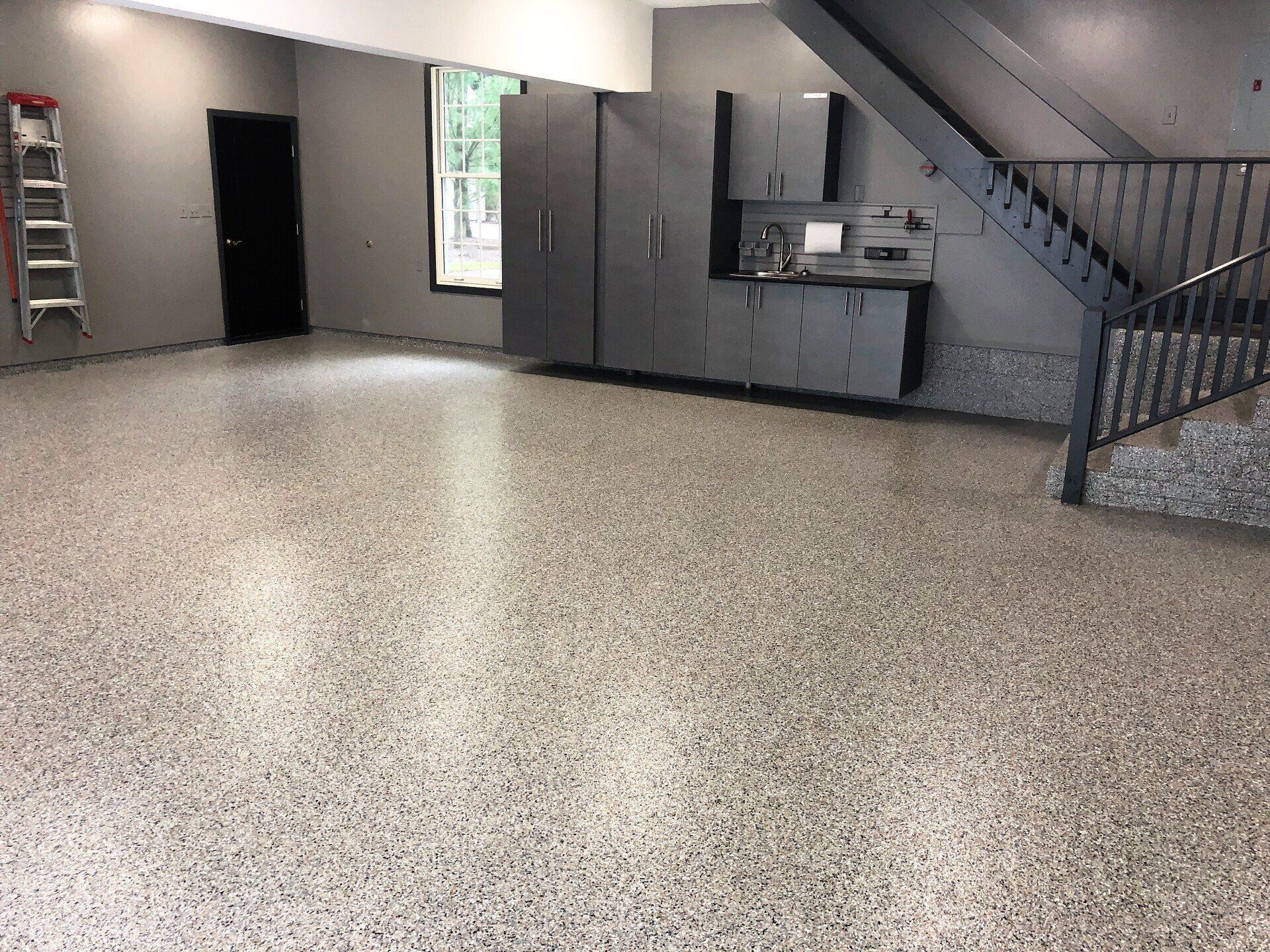
It shows when you sell, too. A deep, glossy, chip-free floor reads instantly as a house that was maintained by someone who cared. Buyers notice it the second the garage door goes up. And day to day, it simply cleans with a mop instead of a wire brush. If you want to see what a properly prepped and coated slab looks like years down the road, our project gallery is full of Northeast Ohio garages that still look installed-yesterday.
Ohio-Specific Considerations
Prep matters everywhere, but in Northeast Ohio it is non-negotiable. Our climate attacks weak coatings from angles that milder regions never see.
Freeze-thaw cycling. Water that sits in an unsealed or poorly bonded slab expands roughly nine percent every time it freezes, then contracts when it thaws — and Cleveland does this dozens of times a winter. A coating that isn’t locked into properly prepped concrete gets pried loose from below, one cycle at a time. A ground, sealed, penetrating system keeps water out of the pore structure where that damage starts.
Salt brine. Every winter your tires carry in a chloride-heavy slush from salted roads. That brine wicks into concrete and lifts weak coatings at the edges and joints first. Proper prep and a continuous, penetrating seal give the salt nowhere to get underneath.
Moisture vapor. Plenty of Cleveland-area slabs — especially older ones poured without a vapor barrier — push moisture up from the ground continuously. Epoxy traps that vapor and blisters. Because our primer penetrates and bonds rather than forming a sealed skin over unprepped concrete, it manages that moisture instead of fighting it.
Year-round installation. Polyaspartic cures in cold temperatures that would leave epoxy gummy and uncured, so we grind and coat straight through Ohio winters. That means proper prep and a real cure happen no matter the month — you can read more about how the
full system is engineered on our polyaspartic floor page.
Frequently Asked Questions
Can’t I just acid-etch and roll on a coating myself?
You can, and it will look great for a season or two. The problem is that acid etching cannot deliver a consistent, contaminant-free profile, so the bond is a gamble across the whole floor. Most DIY and big-box kits fail at the bond line, not the surface — which is exactly the layer you can’t see until it peels.
How do you know when the concrete is actually ready to coat?
After grinding, sound concrete has a uniform, open texture with no glossy or powdery spots and no filled area still soft to the touch. We inspect the whole slab, verify the polyurea repairs have cured, and confirm the surface is clean and dry before a drop of primer goes down. If it isn’t right, we grind again — the prep dictates the schedule, not the other way around.
My slab already has cracks and pitting — is it too far gone?
Almost never. Cracks, spalling, and pitting are prep steps, not dealbreakers. We chase and fill them with fast-curing polyurea, regrind flush, and coat over a monolithic surface. A tired-looking slab is exactly the kind of floor that benefits most from doing the prep correctly.
The Showroom Finish: Prep Is the Product
Anyone can pour resin on a floor. What separates a coating that lasts a lifetime from one that peels by year three is everything that happens before the color goes down — the grinding, the repairs, the second grind, the clean. That is the part you can’t see, and it is the part we refuse to rush. If you want a garage floor built on real preparation instead of a fast coat and a thin warranty, contact Garage Finisher for a free on-site evaluation. We’ll show you exactly what your slab needs — and why Cleveland homeowners trust us to do it right the first time.