Garage Floor Repair in Cleveland: Can Your Concrete Actually Be Saved?
Spider cracks fanning out from the door opening. Pits the size of quarters where road salt puddled all winter. A chalky gray surface that sheds dust every time you back the car out. If that is what you are looking at right now, the question you are really asking is whether garage floor repair in Cleveland is worth the money, or whether your slab is too far gone. The honest answer, after decades of grinding open Northeast Ohio concrete, is that most slabs are absolutely worth saving — but only if the repair is done as engineering rather than cosmetics. Our Forever Floor polyaspartic system is built on that premise: the coating is only as good as the concrete it is bonded to.
Here is what nobody selling you a weekend patch kit will tell you: filling a crack does not fix a floor. It hides one.
The Technical Edge: Repair Is a Substrate Question, Not a Cosmetic One
Concrete fails in a handful of predictable ways, and each one demands a different repair before any coating goes down. Surface spalling — those shallow, flaking craters — is almost always salt and freeze-thaw damage to the top eighth of an inch. Pitting runs deeper and usually means the original slab was finished too wet, leaving a weak, porous cream layer that has been slowly disintegrating ever since. Structural cracks that you can catch a fingernail in are movement, not wear, and they will telegraph straight through anything you paint over them.
Our repair sequence starts with diamond grinding, not acid etching. Industrial diamond tooling removes the compromised cream layer entirely and opens the concrete to a measurable surface profile — think of it as creating thousands of microscopic anchors instead of relying on chemical adhesion to a contaminated surface. Acid washing, by contrast, leaves behind residue and softened paste, which is precisely why so many big-box floor kits release in sheets after two winters.
Once the slab is ground clean, we address the defects on their own terms. Static cracks get chased out, vacuumed, and filled with a rigid polyurea that cures harder than the surrounding concrete and can be ground flush. Spalled and pitted areas get a polymer-modified patch mortar keyed into the profiled substrate, not skimmed across it. Control joints get honored rather than buried, because a joint that is coated shut will crack somewhere less convenient. Only after all of that do we moisture-test the slab and begin building the five-layer system — because a coating applied over unresolved concrete is not a repair, it is a countdown.
The Lifestyle Benefit: A Floor You Stop Apologizing For
The practical change is immediate and larger than people expect. A repaired, coated slab is non-porous, so oil drips, brake dust, antifreeze, and salt brine sit on the surface instead of soaking into it. Cleanup becomes a push broom and a hose rather than a degreaser and a wire brush. The dusting stops, which matters more than it sounds — that fine gray powder migrating off a deteriorating slab is what ends up on your tool chest, your storage bins, and the inside of your car.
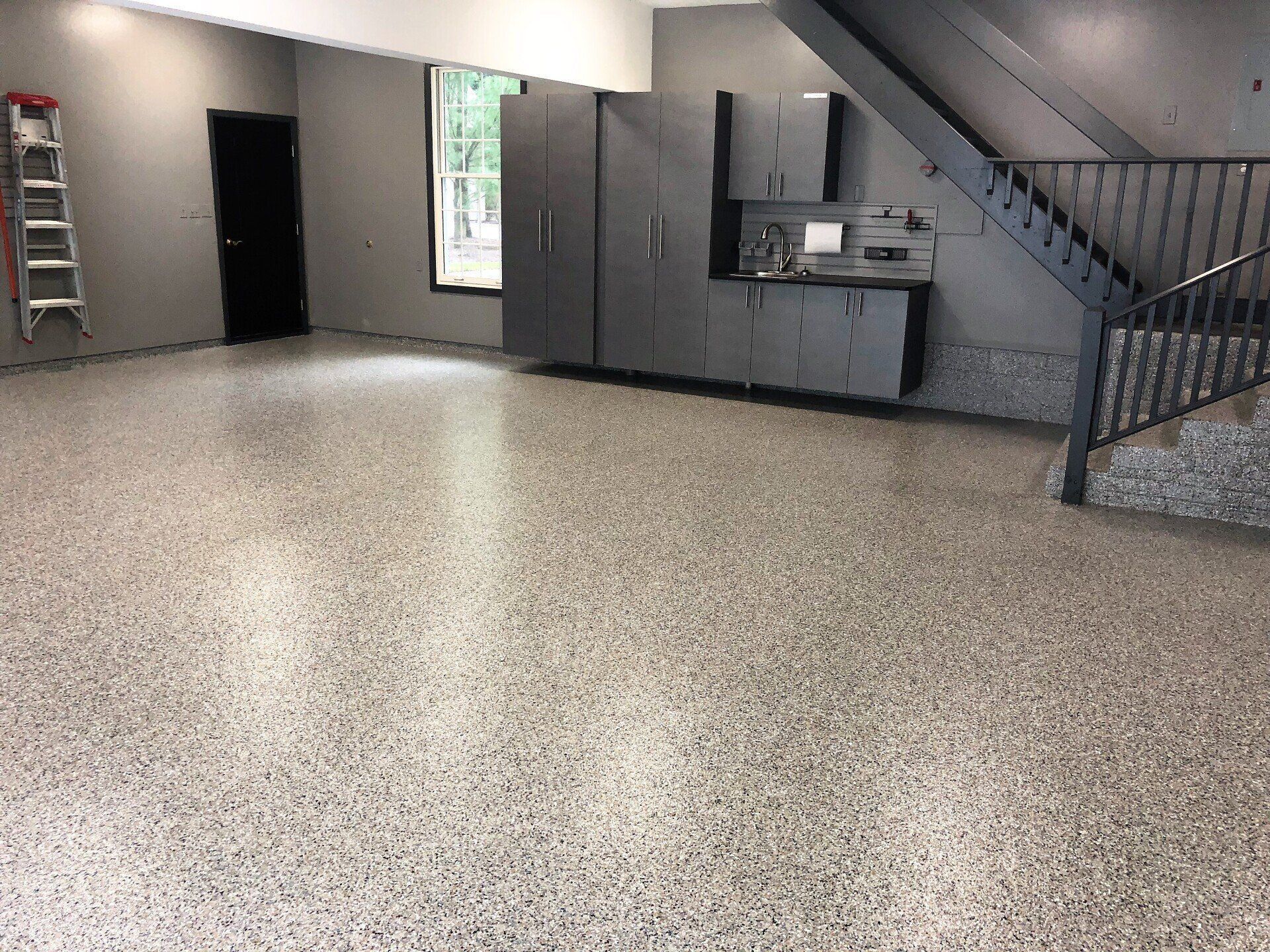
There is a psychological shift, too. A pitted, stained floor quietly tells you the garage is a place where things get dumped. A finished floor with even light reflection changes how you use the space: the workbench actually gets used, the bikes come off the ground, and the garage stops being the room you keep the door closed on when guests come over. Homeowners in Beachwood, Hudson, and Westlake routinely tell us the floor was the upgrade that made the rest of the garage worth investing in.
And when it comes time to sell, appraisers and buyers read a finished garage floor the same way they read a finished basement — as usable square footage rather than deferred maintenance.
Ohio-Specific Considerations
Northeast Ohio is genuinely hard on concrete, and any contractor who quotes you the same way they would in Arizona is not paying attention.
Freeze-thaw cycling is the primary destroyer. Cleveland can swing across the freezing point dozens of times between December and March. Water wicks into porous concrete, expands roughly nine percent as it freezes, and levers the surface apart from the inside. Every cycle widens the damage. This is why sealing the slab against moisture intrusion is the actual repair, and the cosmetic finish is the byproduct.
Salt brine is worse than rock salt. ODOT and county crews pre-treat with liquid brine, which your tires carry into the garage as a film rather than as visible crystals. It stays wet longer, penetrates deeper, and chemically attacks the cement paste. Polyaspartic chemistry is unaffected by chloride; bare or epoxy-painted concrete is not.
Moisture vapor comes up from below. Many Cleveland-area garage slabs were poured decades ago without a vapor barrier beneath them. Hydrostatic pressure pushes moisture upward through the slab, and any coating that cannot breathe will blister off. We calcium-chloride test before committing to a build, and we will tell you honestly if a slab needs a vapor-mitigating primer layer. You can see the range of substrates we have rescued in our project gallery.
Year-round installation is a real advantage. Polyaspartic cures reliably in cold conditions where epoxy simply will not. That means we repair and coat Northeast Ohio garages in February, not just in July — and you are not waiting for a spring backlog.
Frequently Asked Questions
Is my floor too cracked to coat?
Rarely. Cracks caused by shrinkage, salt, or surface wear are all repairable and coatable. The exceptions are slabs with active differential settlement — where one section is visibly moving relative to another — or concrete that has deteriorated to loose aggregate through its full depth. We will tell you plainly if you are in that territory, because coating a failing slab wastes your money and our reputation.
Will I still see where the repairs were made?
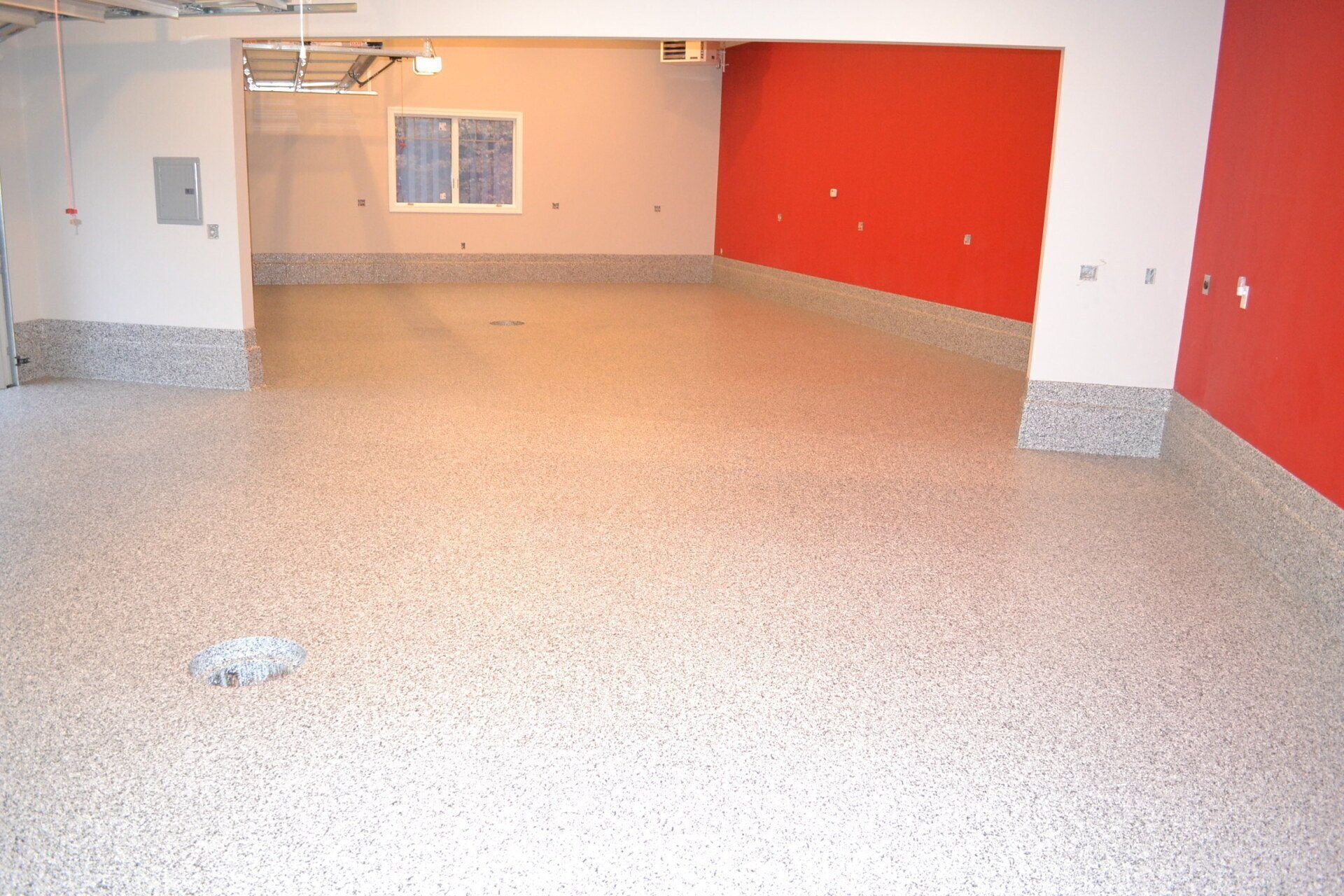
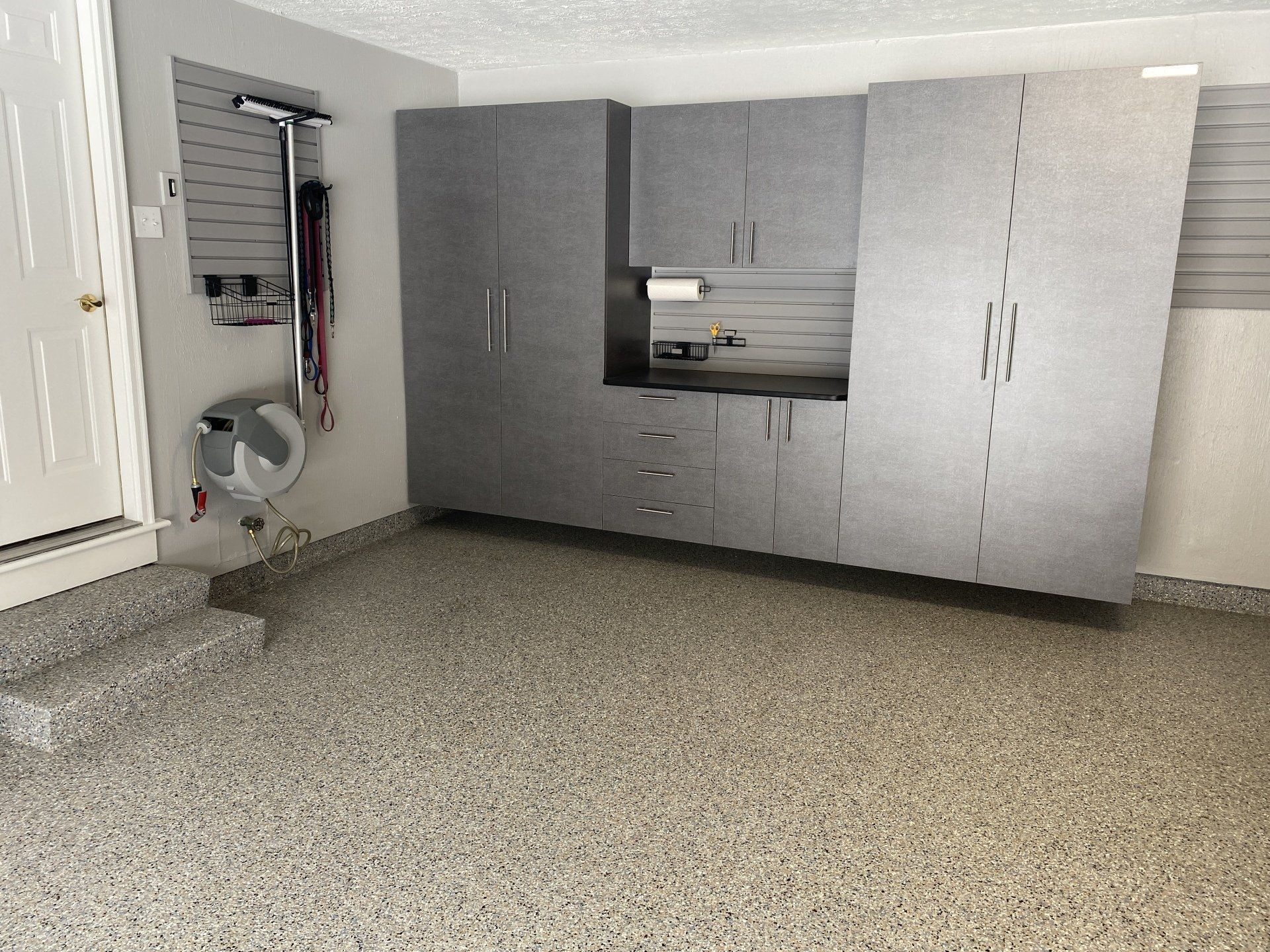
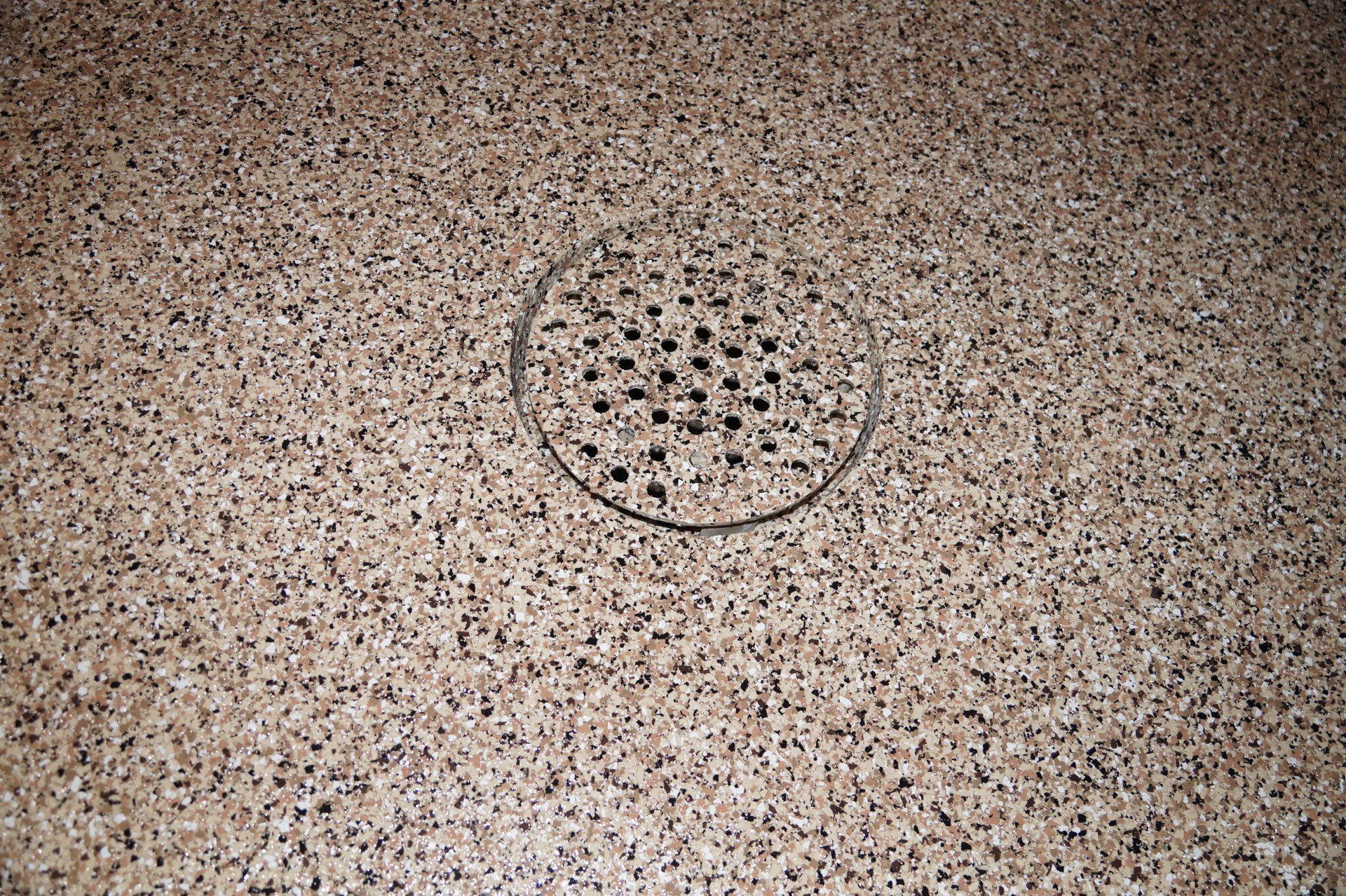
In a full decorative flake build, no. The flake layer breaks up light across the surface and visually erases patched areas, chased cracks, and grinding variation. Solid-color coatings are less forgiving, which is one reason we steer most repair projects toward flake.
How long before I can park on it?
Foot traffic the same evening in most cases, and vehicles typically within twenty-four hours. Polyaspartic reaches service hardness dramatically faster than epoxy, which needs three to seven days and is vulnerable to hot tire pickup for weeks afterward.
The Showroom Finish: Fix It Once, Correctly
Garage floor repair in Cleveland comes down to a single decision: patch the symptom every few years, or resolve the substrate once and be done with it. A crack filler and a gallon of retail epoxy will look acceptable through one summer. A properly ground, repaired, moisture-tested, and polyaspartic-coated slab will still look right when you sell the house.
We would rather show you the difference in person than argue it in writing. An on-site evaluation gets you a straight assessment of what your concrete actually needs — including the parts you do not need — plus a firm number and no pressure. Contact Garage Finisher to schedule your free evaluation, and we will tell you honestly whether your slab is worth saving. Usually, it is.